
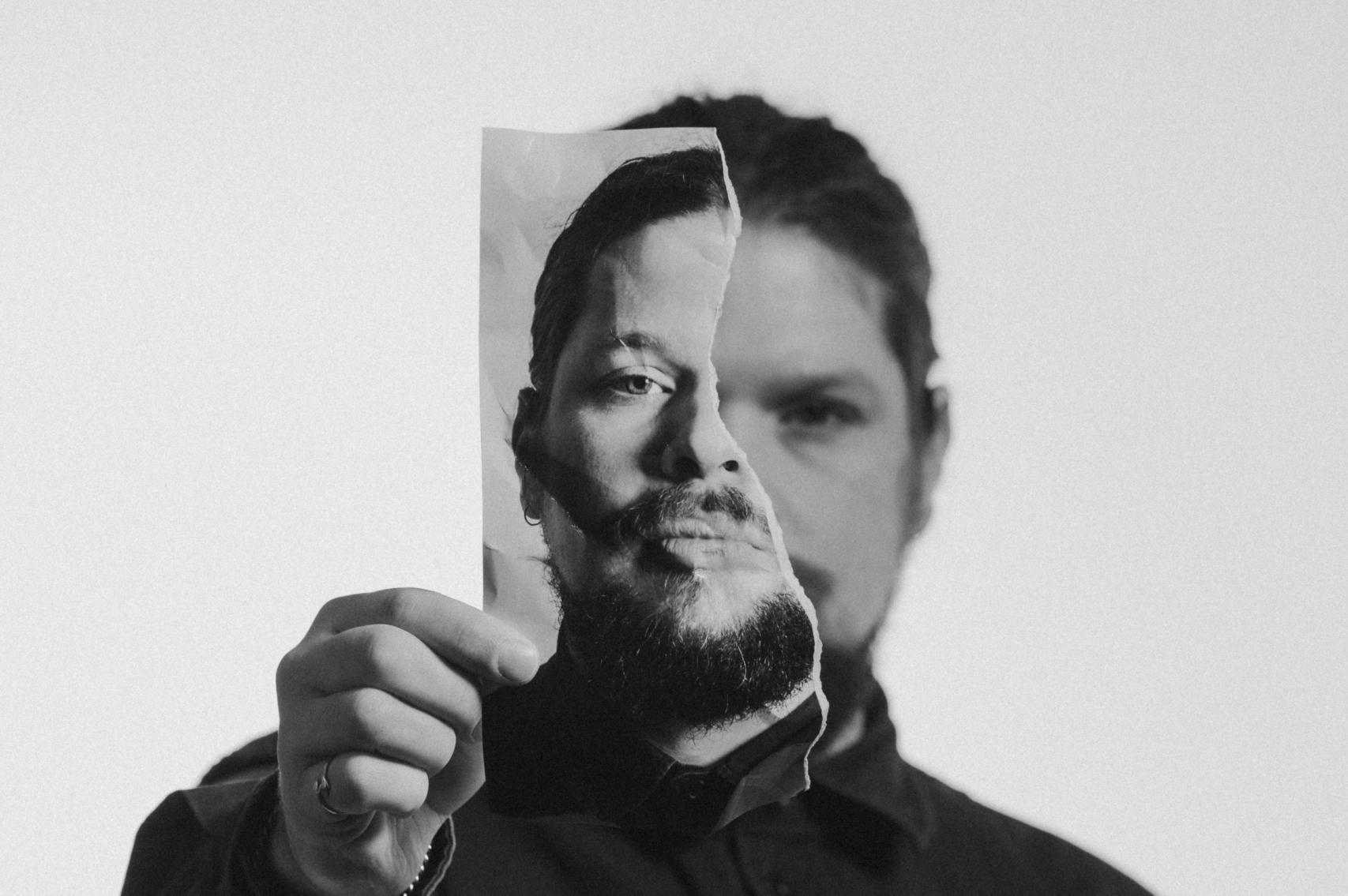
Presentation and Inquiry with Hillary Rodrigues, May 10, 2026
We met outside on the lawn at the Swanwick Centre, where Hillary opened the dialogue by exploring the relationship between Buddhism, Advaita Vedanta, and Krishnamurti’s teachings. The conversation moved naturally between philosophy, personal stories, conditioning, mystical insight, and the mystery of human transformation.
Hillary described Buddhism as a “highly realistic” teaching because it attempts to understand “what truly is, as opposed to what is not… your thoughts are something, but not necessarily referring to realities.” Suffering, he suggested, comes through grasping after ideas and illusions – especially permanence, certainty, and a fixed self. Both Buddhism and Advaita agree that the ordinary psychological self is conditioned and unstable, but Advaita proposes that beneath it lies a deeper reality – Atman or Brahman – while Buddhism generally avoids asserting any eternal essence. Hillary illustrated the Buddhist view with the image of a candle flame: “A candle flame looks like it’s an entity… but it really is more of a dynamic process.” Rebirth, can be seen not only as physical reincarnation, but as the constant psychological birth and death of identities within daily life.
The dialogue repeatedly returned to the paradox of awakening – that “nothing has changed, and everything has changed.” Enlightenment was described less as becoming special and more as the ending of psychological movement away from the present moment. Hillary suggested that mystical realization often feels more like grace than personal achievement, because “the ‘you’ striving for it is the very obstacle.”
The group also reflected on serendipity, karma, and interconnectedness. Hillary shared the story of his father observing a lone peach tree unexpectedly become pollinated by passing bees and later produce abundant fruit. Participants reflected on how many countless encounters and conditions are required for even one human life to exist. Human beings often feel isolated, yet our existence depends completely on everything around us – relationships, history, biology, nature, and invisible forces constantly interacting.
Another important theme was resonance and the role of spiritual teachings. One participant described reading Krishnamurti for the first time and feeling “a deep resonance.” Hillary suggested that a true teacher does not give followers a belief system, but points them toward something already alive within themselves: “A good teacher… points us toward that possibility.”
The dialogue ended not with conclusions, but with shared inquiry, humour, and wonder at the mystery of being alive.
- Anastasia Shtamina

